Why Gauge Isn't Always Important?
Film thickness is no longer a satisfactory standard for judging overall strength. The development of improved LLDPE resin in the liner industry has completely changed the standard method for selecting the correct can liners. These materials have allowed manufacturers to produce thinner, lighter trash bags which are stronger and more durable than the thicker bags previously made from low density resin. This is why gauge is no longer an effective way to determine liner strength. Instead of stating actual thickness, it is now generally accepted to use terminology such as "Light", "Medium", "Heavy", and "Extra Heavy".
Each manufacturer has its own blend formulations, so the proportions of these materials vary from one producer to another. The best way to determine the correct liner is to actually test some suggested samples. At Pitt Plastics, we have our own testing laboratory where we can test our liners or those of another manufacturer and provide you with the test results.
Definitions
It's important to know a little bit about what can liners are actually made of, and how thicknesses are measured. That way you can determine which of the polyethylene resins and liner gauges will work best for your particular application.
Resin - The basic raw material from which can liners are made. There are 3 types of resins: Low Density, Linear Low Density and High Density Polyethylene.
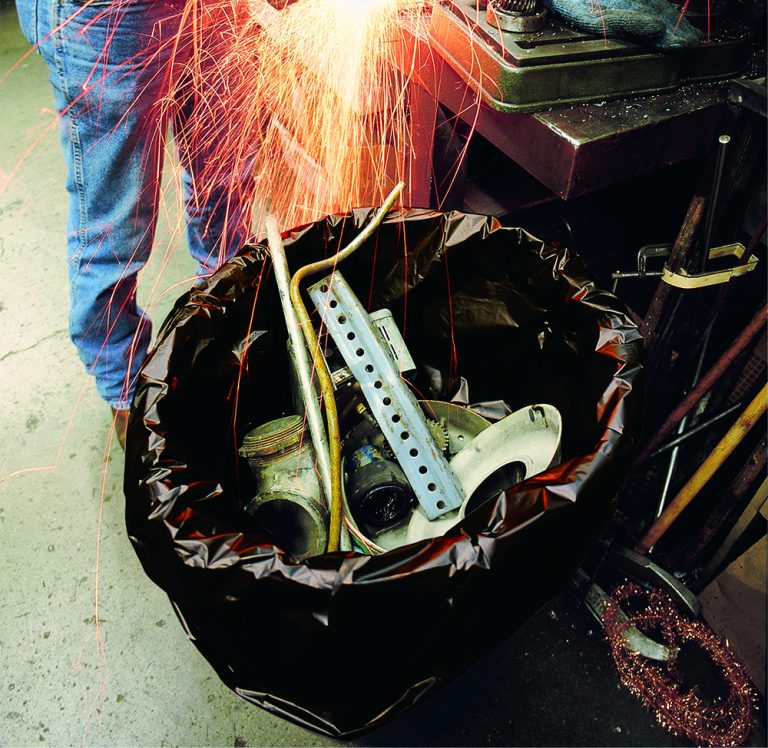
Linear Low Density Polyethylene - This resin is highly puncture and tear resistant. These properties make this the best choice for applications where additional strength and stretch are required. Works well for waste with sharp or jagged edges.
High Density Polyethylene - Liners made from this resin are generally available in lower gauges, and are more temperature resistant.
Low Density Polyethylene - An older resin still used mainly in lower end utility liners. It has largely been replaced by Linear Low Density Polyethylene. Pitt Plastics does not use this resin in any of our can liners!
Post - Consumer and Post-Industrial Polyethylene- This is made from recycled post-consumer plastics such as milk jugs and industrial scraps. These are reprocessed and blended with other types of resins to produce new high quality liners.
Gauge - A term used to describe the thickness of a liner. Low density liners are measured in mils, while High Density liners are generally measured in microns.
Mil - Measurement based on one hundred thousandths of an inch (.000). For example, a .55 mil bag would be 55 thousandths of an inch thick. Common low density liners range from .37 to 1.8 mil in thickness.
Micron - Based on thousandth of a Millimeter (.000000). High Density liners usually range from 6 to 22 microns in thickness.
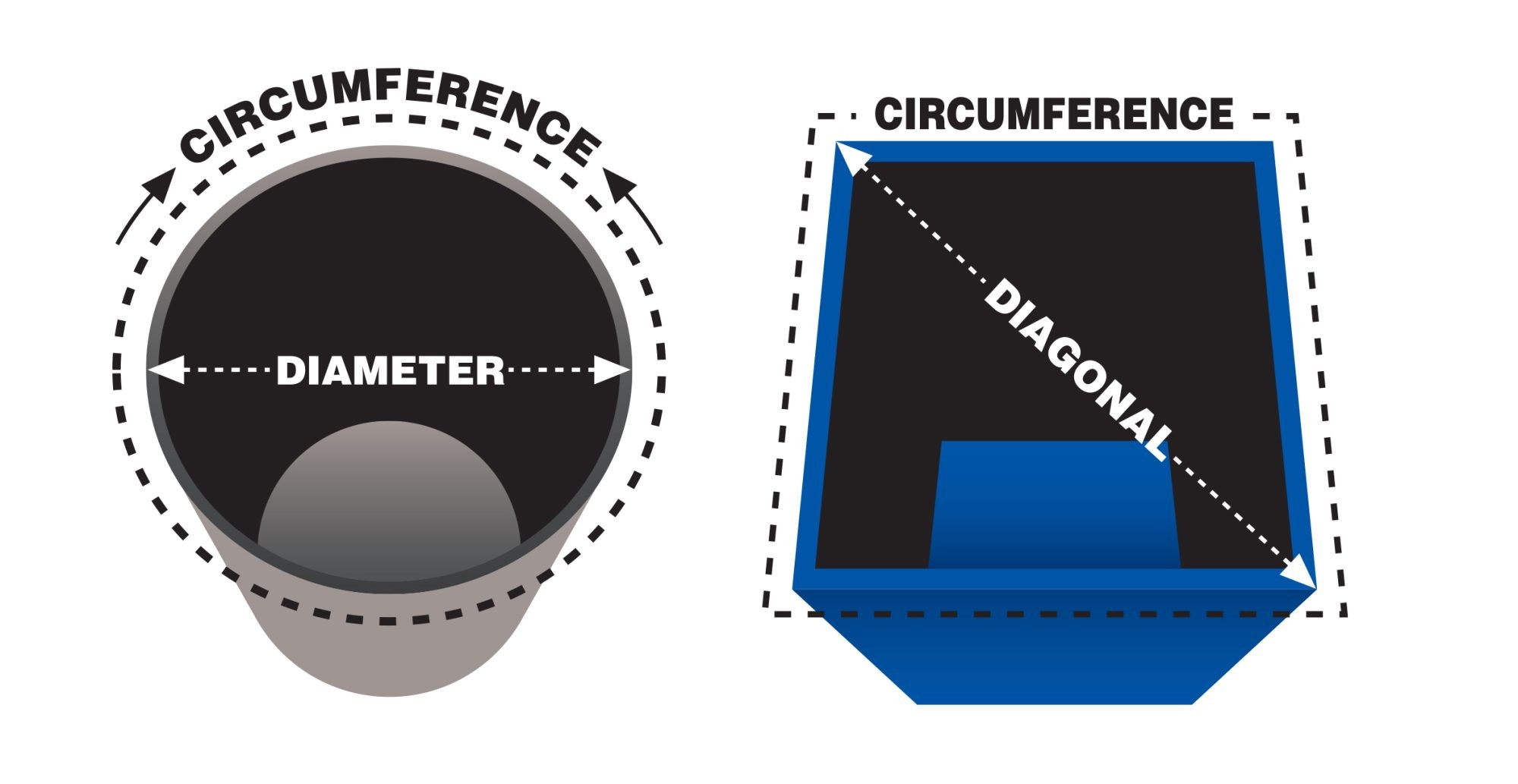
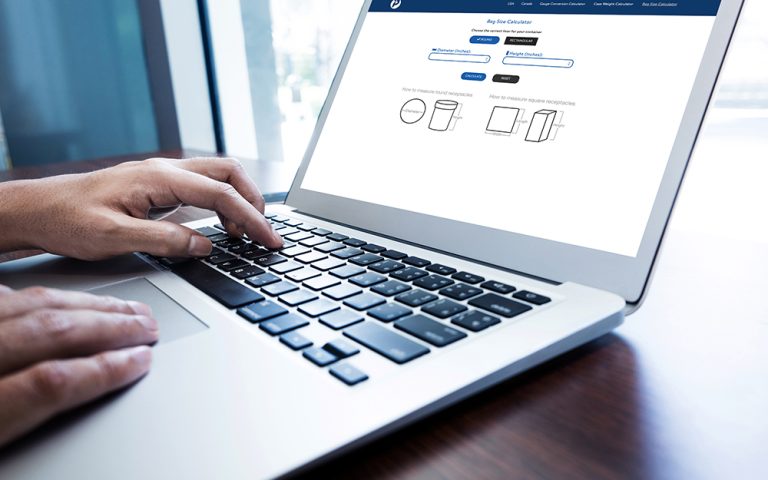
Advantages of Linear Low Density Can Liners1. Maximum puncture and stretch resistance compared to High Density2. Multi-purpose applications 3. Most prevalent type of film used in the industry today. 4. Manufactured in a wide variety of colors. 5. Compared to traditional low density film, linear low can be run at a lighter gauge with equal strength. Advantages of High Density Can Liners1. HMW/HD liners are about 3 times stronger and more durable than ordinary polyethylene liners of the same thickness. Measuring for Correct Liner SizeBag Width: Use 1/2 of the outer circumference of the receptacle. Bag Length: Use the height of the receptacle, plus 1/2 of the container bottom, plus 3 inches (for overhang). For square or rectangular receptacles, use the fiagonal of the receptacle bottom rather than the diameter. Or, go to the calculator here. Convert Microns to Mils:To convert microns to mils, divide the micron by 25.4 to arrive at the true mil thickness. Or, go to the calculator here. Convert Mils to Microns:To convert mils to microns, multiply the mil by 25.4 to calculate the true micro thickness. Or, go to the calculator here. How to Figure Case Weights:Linear Low High Density |
Star Seal (or X-Seal) |